36 épisodes
(6 h)
Filtrer
Saison 2011
Saison 2012
Saison 2013
Saison 2014
Saison 2015
Saison 2016
Saison 2017
Saison 2018
Saison 2019
Saison 2021
Saison 2022
Épisodes

S2015 E1 • Trapped in Yemen
Fleeing from civil war since 1991, Somalis are confronted by poverty and abuse as they seek refuge in Yemen.
Première diffusion : 14 janvier 2015
S2015 E2 • Return to Morocco
The story of Morocco's Jewish community told from the perspective of those who have left, stayed or are now returning.
Première diffusion : 21 janvier 2015
S2015 E3 • The Deportees
The stories of Palestinians deported from Israel between 1977 and 2012, their lives in exile and their longing for home.
Première diffusion : 27 janvier 2015
S2015 E4 • Ultras
How Egypt's most devoted football fans became a major protest group during their country's revolution and the aftermath.
Première diffusion : 2 février 2015
S2015 E5 • The Wooden Rifle
Five Lebanese in Beirut reflect on how their lives have been affected by their country's civil war in the 1970s and 80s.
Première diffusion : 18 février 2015
S2015 E6 • Ahalil: Music of the Red Oasis
The music of the Algerian Sahara, known as Ahalil, is a key part of a way of life that has survived for centuries.
Première diffusion : 25 février 2015
S2015 E7 • Death of Aleppo
Al Jazeera World follows the everyday lives of Aleppo residents living amid the ongoing conflict and destruction.
Première diffusion : 25 mars 2015

S2015 E8 • From Riches to Rags
The stories of three Iraqi women, forced to seek refuge in Jordan where their new lives have proved very tough indeed. 01 Apr 2015 12:55 GMT | War & Conflict, Iraq, Jordan, Syrian crisis, Humanitarian crises Before the US-led coalition invaded and occupied Iraq in 2003, Fatima Mohammed, Bushra Kazem and Ashwak Hnon were comfortably off, had strong marriages, happy homes and stable family lives in Basra, Najaf and Baghdad respectively. They belonged to a relatively small middle class that enjoyed the oil-generated benefits of Saddam Hussein's regime. But in the prolonged occupation, uncertainty and violence that followed the invasion, millions of Iraqis were displaced and many left for Syria and Jordan. There are now over 60,000 Iraqi refugees registered with aid agencies in Jordan. Fatima, Bushra and Ashwak were among those Iraqis who chose to flee and who sought refuge in Jordan. Fatima Mohammed fled from the southern Iraqi city of Basra after her first husband's body was found in a burned-out car. Bushra Kazem is a single mother raising four daughters. Hnon has six children and has not been able to send them to school since the family left Iraq in 2011. Her husband suffers from serious depression and all three women are now responsible for the welfare of their families. From Riches to Rags examines how the fallout of the Iraq invasion affected the lives of three women. It tells their personal stories of disrupted lives, traumatic escapes and battles to support their families amid a descent into near poverty, as refugees living in the Jordanian capital, Amman. Fatima, Bushra and Ashwak once employed staff and domestic help. Now they scrape together a living -supplemented by UN handouts - by working for local Jordanian middle class families, doing odd jobs like the door-to-door selling of cosmetics, cooking Iraqi food and cleaning homes. Dependent on aid, these women feel that the plight of Iraqi refugees has now been overshadowed by the conflict in Syria, with an estimated 800,000 Syrians entering Jordan in the past four years. As three women grapple with their past lives, the ongoing violence in Iraq and the modest lives they now lead. Their stories and experiences also tell of their resilience and resourcefulness as they navigate their new-found lives, labelled as "urban case" refugees.
Première diffusion : 1 avril 2015
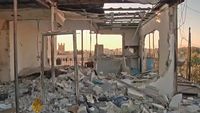
S2015 E9 • Jerusalem Hitting Home
In East Jerusalem, Palestinians whose houses are declared illegal by Israel are being forced to raze their own homes. The city of Jerusalem lies at the heart of the Israeli-Palestinian conflict, and property, housing and Israeli settlements are burning issues. The Israeli occupation of East Jerusalem has forced thousands of Palestinians from their homes and created a serious housing shortage. Since 1967, the Palestinian population has quadrupled, climbing to over 300,000 - nearly 40 percent of the population. Yet the Israeli municipal authorities in East Jerusalem deem that Palestinians can build property on only nine percent of the land. For Palestinians, construction permits are prohibitively expensive and bureaucratic processes make them difficult to obtain. Many Palestinians have had no choice but to build their own homes without permits, even with the threat of demolition hanging over their heads. Israel has now declared around 20,000 of these buildings to be illegal and has ordered their demolition. Rather than paying the high costs of fighting demolition orders in court, or paying the fines for getting Israeli crews to pull down their homes, Palestinian families are making the difficult choice to bring them down themselves. Forced to demolish their own homes, many have been made homeless, or pushed away from the city centre. Others have chosen to remain in the ruins of the properties they themselves have pulled down. Jerusalem: Hitting Home examines how these demolitions are not just changing the face of the city but also the lives of the people who live there. The film follows three families who have been forced to take hammers to their own homes. It traces the events that led to the demolitions, where the families have gone afterwards, and the emotional and economic impact it has had on them. The filmmaker also charts how city planning and municipal policies have led to a set of building rules that many argue are pushing Palestinians towards the outskirts of the city, disrupting their lives and shifting the city's demographics in favour of the Israeli majority.
Première diffusion : 8 avril 2015
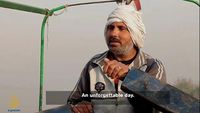
S2015 E10 • People of the Nile
The Nile's delta and waters nourish 11 North African countries and the river has long inspired ancient myths, poetry and the curiosity of travellers. This film takes an intimate look at the everyday lives of two families living on the Nile. Salama Saeed left school when he was 12 years old to become a fisherman. Back then, fishing was a profitable job; now, it is a hand-to-mouth existence, as fish stocks have steadily depleted. Saeed, his wife and three children live on a boat near Giza.
Première diffusion : 14 avril 2014
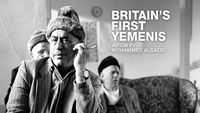
S2015 E11 • Britain's First Yemenis
The story of one the UK's oldest Muslim communities - and the challenges facing their British-Arab descendants today.
Première diffusion : 29 avril 2015
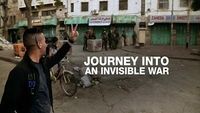
S2015 E12 • Journey into an Invisible War
The story of how Israeli settlements continue to spread into Palestinian territory despite international opposition. French producer and reporter Paul Moriera travels through the West Bank to meet Palestinians and Israeli settlers. In Hebron, Moriera sees how the old Arab city is gradually being overwhelmed by Israeli incomers, whose security forces are imposing a bizarre street-by-street apartheid on the Palestinians who have always lived there. Moriera encounters the sometimes startling intolerance of their ultra-orthodox communities.
Première diffusion : 15 mai 2015
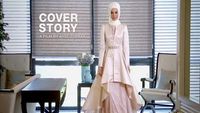
S2015 E13 • Cover Story
Class dynamics are changing in Turkey.When Turkey was founded in 1923 it was on firm secular principles. Turkish women were restricted in wearing the headscarf - known as the hijab outside Turkey - in all public sector jobs and universities for most of the 20th century.During the current AKP party government, a young, confident, female, Muslim middle class has emerged, that is less worried about being socially accepted and more comfortable sharing public spaces with secularists.Hulya Aslan is the editor of Ala, a monthly fashion magazine in Istanbul that serves a growing Turkish market of Muslim women who think that fashion and Islam are compatible - 'conservative' women who want to wear the hijab but also want to dress fashionably, with colour and style.This film follows Hulya Aslan at Ala and looks at hijabi fashion, social change in Turkey and the ongoing debate about a Muslim woman's right to choose how she dresses.
Première diffusion : 6 mai 2015
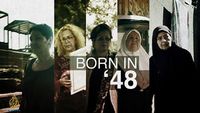
S2015 E14 • Born in '48
Five women, Israeli and Palestinian, born in the same year but irreconcilably divided by history and events.
Première diffusion : 27 mai 2015
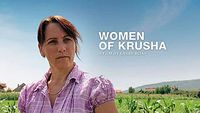
S2015 E15 • Women of Krusha
The story of how the women of a Kosovan village rebuilt their lives after many of their men were killed in 1999.
Première diffusion : 3 juin 2015
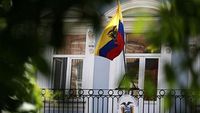
S2015 E16 • Snowden's Great Escape
As the US tries to detain the whistleblower, we look at the diplomatic repercussions of tracking down Edward Snowden.
Première diffusion : 8 juin 2015
S2015 E17 • Istanbul My Dream
Turkey has emerged as a magnet for African migrants as they descend in their thousands on its shores every year in search of a better life.In the past five years, numbers have more than doubled as immigrants from countries like Nigeria, Uganda and Liberia throng to Istanbul - a city that offers the possibility of a steady job, paycheck and a safe living environment.Istanbul My Dream follows the story of four African migrants who have left their homes in search of social mobility, riches and even stardom.
Première diffusion : 10 juin 2015
S2015 E18 • Palestine Divided
In 1947 when the UN General Assembly voted for the partition of the region between Jews and Palestinian Arabs the land was divided on a relatively equal measure.But after the 1948 Arab-Israeli War only 22 percent of Palestinian land remained. When Israel was founded in 1948 it divided Palestinians between the Gaza Strip and the West Bank, creating separate territories with very little freedom of movement between the two.In the Six-Day War of 1967, Israel occupied both territories, began building settlements and appeared to implement separate policies on each.'The aim has always been to create different atmospheres and cultures; here and there,' says Dr. Nashat al-Aqtash, a political analyst and academic.The decades of separation have distanced the Palestinian communities living in the two territories who have developed distinct social and cultural identities.None of the conflicts or peace talks over the decades, including the Oslo Accords of 1993, has succeeded in changing the map or this divide.Filmmaker Asraf Mashhrawi examines the political, social and economic history of the split, analysing major events such as the Oslo Accords, the Fatah-Hamas conflict, the Israeli blockade of Gaza and the attacks of recent years - with interviews from Israeli experts like Haaretz journalist Amira Hass and lawyer Sari Bashi.
Première diffusion : 17 juin 2015
S2015 E19 • The Road to Sanaa
The story of political skullduggery in Yemen and the high cost to the Presidency of alleged collusion with the Houthis.
Première diffusion : 24 juin 2015
S2015 E20 • Ramadan in Kenya
Muslims have lived in Kenya for centuries and today make up about 11 percent of the country's population. These communities live on the coast in cities like Mombasa - where nearly half of the city's inhabitants are Muslim - and in the country's northeast.Ramadan in Kenya meets Muslims living in Mombasa, Kisumu and Nairobi and captures their lives and culture in their homes, at work and in their places of worship.They talk about what aspects of Ramadan mean the most to them.Aseef Akram is a 25-year-old halal butcher living in Mombasa. He talks about the 'spirit of Ramadan' in the city, the culture of openness towards those who are fasting, and about breaking that fast with the coconut dishes of the region.'For me [during Ramadan], I tend to be most spiritually connected to my God, my creator,' says Akram.In the western city of Kisumu, Fauza Asya Kombo picks and sells bananas for a living and is raising five children on her own after her husband died.Although earning a livelihood can be a struggle, she says, 'When we've finished [iftar], we give any leftover bread to our neighbours. Food doesn't go to waste ... Wasting leads to non-belief.'Arafat bin Talebis, a sixth grader at a shelter for orphans, talks about the peace he gains from his Quranic studies and the importance of his faith in his life.'To me, the month of Ramadan acts like a guide. If I've made mistakes before Ramadan, I'll avoid making them once Ramadan starts,' he says.From the Quran memorisation competitions which attract children studying in madrassas in Tanzania and Uganda - to Akram's family using the opportunity to eat together to break their fast, Ramadan in Kenya experiences the spirituality, traditions and significance of the holy month through the eyes of individuals who observe it.
Première diffusion : 1 juillet 2015
S2015 E21 • The Childminders
Educated women from the former Soviet republics work as nannies in Turkey to support their families back home.Subscribe to our channel http://bit.ly/AJSubscribeFollow us on Twitter https://twitter.com/AJEnglishFind us on Facebook https://www.facebook.com/aljazeeraCheck our website http://www.aljazeera.com
Première diffusion : 22 juillet 2015
S2015 E22 • Dalit Muslims of India
In a bid to escape poverty and caste discrimination, some Hindu Dalits are converting to Islam and other faiths.
Première diffusion : 2 septembre 2015
S2015 E23 • The Mother Refugees
Four women refugees in Lebanon who have spent years raising their children in camps, with resilience and resourcefulness, hope one day to return home.
Première diffusion : 17 septembre 2015
S2015 E24 • Exile In New Caledonia
The untold story of Algerians deported by France to the Pacific island in the 1870s and their descendants today.
Première diffusion : 17 septembre 2015
S2015 E25 • Rwanda: From hatred to reconciliation
Between April and July 1994, more than 800,000 men, women and children, mostly from Rwanda's Tutsi minority were slaughtered.In one of the worst atrocities in recent history, Hutu paramilitaries unleashed a bloodbath, killing every person they could find, as neighbours murdered neighbours.Sparked by the death of President Juvenal Habyarimana, a Hutu, when his plane was shot down above Kigali airport on 6 April 1994, Hutu extremists seized on his death to exterminate the Tutsi community.In Rwanda: From hatred to reconciliation , we explore the genocide through the prism of the media, exploring their role - both then and now.This film explores how the country's earliest print journals, followed by newspapers and radio, all played a major part in reinforcing prejudices, inciting racial hatred and fanning the flames of violence.The Catholic church and its journal Kinyamateka, the country's first periodical, are now seen as playing a vital role in the creation of racist ideology.Produced in the 1930s under Belgian rule - one of Kinyamateka's early journalists, Gregoire Kayibanda, would later become the country's first president after independence.'[Kayibanda] used to encourage the Hutu to expel the Tutsi or fight them, viciously.' says Jill Bayafra from Rwanda University. 'He used to compare them to snakes.'In the 1960s, radio would become a powerful means to spread hate and when the Rwandan Patriotic Army (RPA), made up of exiled Tutsis, invaded in 1990, Radio Rwanda stepped up its anti-Tutsi propaganda.In June 1993, a new radio station, Radio Television Libre des Mille Collines (RTLMC), encouraged people to arm themselves and attack Tutsis.At the height of the genocide, it broadcast lists of people to be killed and instructed killers on where to find them.'Feeling pressured' says Emmanuel Ndaysaba, 'I took my sword and joined the militias.'Twenty years on, and with many of those responsible serving sentences for war crimes, the media now spreads a new spirit of reconciliation - and Emmanuel has since re-visited his violent past: 'Driven by my conscience, I confronted those I committed crimes against,' he says.
Première diffusion : 30 septembre 2015
S2015 E26 • Noam Chomsky: Knowledge and Power
An in-depth look at the work and views of the man described as 'one of the greatest minds in human history'.
Première diffusion : 15 octobre 2015
S2015 E27 • Seeing Isn't Everything
Nearly half-a-million blind people live in Turkey. While attitudes are gradually changing in Turkey, awareness of blindness tends to lag behind awareness and understanding of disability in some other parts of the world.In Seeing Isn't Everything four blind people living in Istanbul talk about how they are all too often defined through their disability and want to challenge social perceptions about what it means to live without sight.One of them is Burcak Souoglu who lost her sight aged four. She is now a single mother after her husband left her with two children. She works on the switchboard at Marmara University. She lacks confidence out on the often frenetic streets of Istanbul - but as a devoted mother derives immense satisfaction from raising her two children.Burcak's younger sister, Gamze, has five percent of her sight. 'I can distinguish big objects…and also the main colours… When you're a teenager you take your physical appearance very seriously…but you don't know what you look like,' she says. Still Gamze, like the other three characters in this film, exudes positivity.'Gaining pleasure from something isn't always related to seeing. Seeing isn't everything.' All four of them talk about their personal strategies for leading full lives and challenging perceptions about the blind, particularly in Turkey.
Première diffusion : 21 octobre 2015
S2015 E28 • Guns in Switzerland
Switzerland is proud of being a democracy, of being internationally neutral and of not having been involved in conflict since a civil war in 1848. But is still has the second largest armed force per head of population in the world. Why?Military service is mandatory with almost all eligible males trained as soldiers and women also serving as volunteers: 'For me, joining the army was patriotic decision,' says Sergeant Laetitia Geiser. 'I'm intrigued when it comes to serving my country.'Military training camps are a common across Switzerland, as are civilians carrying shotguns over their shoulders.Behind only the US and Yemen in the number of guns per capita; there are around 29 guns for every 100 people. And in a country of only 8 million people, that means at least one in four households has a gun.The pro-military culture has made target shooting a popular national sport, even amongst children. 'I inherited my passion for shooting from my parents,' says nine-year old Luca.Despite the strong gun culture, there are rarely more than forty gun homicides a year, compared with the US - with its 30,000 gun murders a year and 31 every day.Nonetheless, a fresh debate over gun control has been rekindled in Switzerland.Sandro Cattacin from Geneva University doesn't believe keeping arms at home creates greater security; and anti-gun lobbyist Amanda Gavilanes launched a campaign five years ago with the slogan 'for a better protection from armed violence.'But with guns so engrained in Swiss culture and the crime statistics so relatively low, is it a debate that will ever lead anywhere?
Première diffusion : 21 octobre 2015
S2015 E29 • From Lebanon to Africa
Generations of Lebanese migrants call Africa home. We look at their achievements, challenges and search for identity.
Première diffusion : 28 octobre 2015
S2015 E30 • Jerusalem: Dividing al-Aqsa
The al-Aqsa Mosque compound – of historical and religious importance to both Muslims and Jews and a point of tension between Israelis and Palestinians.-Subscribe to our channel: http://bit.ly/AJSubscribe-Follow us on Twitter: https://twitter.com/AJEnglish-Find us on Facebook: https://www.facebook.com/aljazeera-Check out our website: http://www.aljazeera.com/
Première diffusion : 11 novembre 2015
S2015 E31 • Libya’s Forgotten King Part 1
The story of King Idris I who unified Libya and became its first - and last - king before being toppled by Gaddafi in 1969.-Subscribe to our channel http://bit.ly/AJSubscribe-Follow us on Twitter https://twitter.com/AJEnglish-Find us on Facebook https://www.facebook.com/aljazeera-Check our website http://www.aljazeera.com/
Première diffusion : 19 novembre 2015
S2015 E32 • Libya’s Forgotten King Part 2
The story of King Idris I, who unified Libya and became its first king in 1951 before being toppled by Gaddafi in 1969.-Subscribe to our channel: http://bit.ly/AJSubscribe-Follow us on Twitter: https://twitter.com/AJEnglish-Find us on Facebook: https://www.facebook.com/aljazeera-Check our website: http://www.aljazeera.com/
Première diffusion : 25 novembre 2015
S2015 E33 • The Mosque of West Amsterdam
For the past 16 years, Huseyin Gunduz has dreamt of building a mosque in the Dutch capital, Amsterdam.Having had to perform congregational prayers in factories, community centres and people's basements; he has spent years campaigning and fundraising to build a place of worship and make his dream a reality.In The Mosque of West Amsterdam, we follow Huseyin as work finally nears completion on the Western Mosque.'The thought of the outcome and success leaves me speechless,' he says. 'I believe we'll be rewarded in the afterlife for our contribution and efforts.'Known locally as Westermoskee, the structure - modeled on Istanbul's iconic Hagia Sophia - is in urgent need of funds to be completed.From its conception, in the early 1990s, to the present day - construction has been fraught with controversy, as well as political and financial difficulties.Planning problems, corruption scandals, local opposition and anti-Islamic prejudice have plagued the project, halting development for nearly a decade.The extreme-right leader Geert Wilders, whose Freedom Party is riding high in the opinion polls, has also been an outspoken critic, leading to growing local opposition.This film looks at how Huseyin tries to raise the capital necessary for development while trying to bridge relations with residents who are growing increasingly weary of the mosque.- Subscribe to our channel: http://bit.ly/AJSubscribe- Follow us on Twitter: https://twitter.com/AJEnglish- Find us on Facebook: https://www.facebook.com/aljazeera- Check out our website: http://www.aljazeera.com/
Première diffusion : 3 décembre 2015
S2015 E34 • Marriage and Divorce in Morocco
Moroccan family law is built around the Moudawana, a family code that governs marriage, divorce, child custody, maintenance and the division of assets.Adapting well-established traditions, it has been in existence since the 1950s; but, historically, marriage - and divorce - had always been in the hands of men.But in recent decades the Moudawana has faced pressure from civil society groups and women's rights campaigners to introduce reforms, prompting King Mohamed VI to appoint a commission to examine its principles and practice in October 2003.Its findings have resulted in more rights for women and updates to many of its rules, particularly in introducing new types of divorce, including for 'irreconcilable differences'.In Marriage and Divorce in Morocco we look at a host of areas affected by the family code including registration of marriage, division of assets, maintenance, domestic violence, rape, and the effects on men who find themselves in abusive relationships.We hear from lawyers, judges, social commentators and also ex-wives and ex-husbands - like Fadma Amzil, who had a Fatiha marriage, but which was not registered with the civil authorities.'I only had a Fatiha marriage,' she says. 'He got married to another woman and their marriage was registered. My situation would have been different if my marriage had been registered.'We also speak to critics of the code who argue that some discrimination has survived the 2004 reforms.We hear from the family of Amina Filali, a 16-year-old whose case grabbed headlines when she took her own life after being forced to marry her alleged rapist.A loophole in the law, penal code article 475, meant a rapist could evade prosecution if he married his victim.This film looks at the human stories behind the Moudawana, how it has modernised family law, and at the progress it still probably needs to make.
Première diffusion : 9 décembre 2015
S2015 E35 • Bulgaria, My Land
Bulgaria's ethnic Turkish community, persecuted and even deported last century, continues its fight for recognition.- Subscribe to our channel: http://bit.ly/AJSubscribe- Follow us on Twitter: https://twitter.com/AJEnglish- Find us on Facebook: https://www.facebook.com/aljazeera- Check out our website: http://www.aljazeera.com/
Première diffusion : 23 décembre 2015
S2015 E36 • The Retirement Trap
Moroccans who have spent all their working lives in France and the Netherlands are now facing discrimination against their pensions in what has been slammed as a form of 'retirement apartheid'.Retired French and Italians can live anywhere in Europe without it affecting their domestic pension entitlements; but north Africans who've lived and worked in France for more than 40 years are denied the same rights.Instead they face a stark choice - return to their home countries and lose large slices of their pension and face medical bills they can't afford; or remain in, say, France with their full pensions but away from their families back home.'I'm sick,' says 75-year-old Mohamed Air Wakrim who's lived in France for 45 years. 'If I stay in Morocco for more than six months, they'll find out and take away my rights.'Contrast this with the treatment of Europeans and you have what some people have called 'retirement apartheid'.'In Tunisia, I only have to pay four or five percent tax,' says Italian pensioner Mauro Sansovini. 'In Italy, the tax rate on my pension income is between 40 and 45 percent.'Salim Fkire who heads the campaign group 'Moroccans Residing Abroad' sums up the situation: 'Mohamed and Patrick both worked in the same factory, got the same pension and paid the same taxes. Today, Patrick has the right to live permanently in Agadir. But Mohamed can't stay in his home town for more than six months. After that he’ll have to return to France or else he’ll lose his social rights.'In The Retirement Trap, we look at the struggles of Moroccans to redress this pension injustice and escape the retirement trap they find themselves in.- Subscribe to our channel: http://bit.ly/AJSubscribe- Follow us on Twitter: https://twitter.com/AJEnglish- Find us on Facebook: https://www.facebook.com/aljazeera- Check out our website: http://www.aljazeera.com/
Première diffusion : 30 décembre 2015