8 épisodes
(3 h 20 min)
Épisodes
S8 E1 • Ranging the Target - Visual Estimation Techniques
How do you estimate target range? What are the best ways to determine the distance to a target in the field? - These next few videos will cover all the details - from methodology and concept to ranging tools and equipment. Rex has you covered! VIDEO NOTES: Range Estimation Things that change perceived distance to a target: Nature of Target: Regular outlines, with well defined edges(buildings, vehicles, etc... Appear CLOSER, High Contrast, Targets Appear CLOSER, Partially exposed -- Appears FARTHER Terrain: Smooth terrain -- Appear CLOSER, Across depression -- Appear CLOSER, Uphill -- Appear CLOSER (unless it is sky lining - light blurs outline and it appears farther, Downhill -- Appear FARTHER, Objects along straight-lines -- roads, RRs, tree-rows, rows of buildings - Appear CLOSER Light Conditions: Full sunlight / well lit / sun to the back -- Target Appears CLOSER, Poor lighting / smoke / rain -- Appears FARTHER - at night this is extreme, Sun behind target -- Appears FARTHER Football Field Method: sorta' works - if you have relatively good distance perception. Thank you for your donations to the Rex Reviews Project! We hope these videos continue to be a great help to you all. All the music, video, and photography in this video was created by TiborasaurusRex, an unsigned artist. Song Title: Wadi Watir Music and Lyrics by: TiborasaurusRex Instrumentation and Vocals by: TiborasaurusRex Recorded by: TiborasaurusRex

S8 E2 • RANGING ENEMY FIRE - Crack Thump Method
Crack / Thump Method: The speed of sound is approximately 340 m/s at ATD ATM while the bullets velocity typically starts off 2 to 3 times faster than this. This results is a sound delay ("crack-bang") between the two's arrival at the target. The enemy's supersonic bullets produce a sonic boom, creating a "crack" sound as they pass by. The idea is, that if the enemy bullet's TOF is known, his range can be roughly estimated by measuring the delay between the bullet's passing and the sound of the rifle shot, and then compared it to a table of values. However, this is only relatively effective out to 500 meters; beyond this, the delay starts to stabilize and then drop back down to zero and eventually reverse. This all happens differently depending on your cartridge, load, and atmospheric conditions. FM 23-10 Distance to firer: "The time difference between the crack and the thump can be converted into an approximate range. A one-second lapse between the two is about 600 yards with most calibers; a one-half-second lapse is about 300 yards." Is this helpful? Watch this video to see! Sorry for the crazy audio shifts - this was rendering attempt #3 and Rex almost threw his computer out the window into the pond... lol -must be that old 'reptile nature' coming through again. If anyone knows the special prayer for computer video rendering, please say it... Song Title: Wadi Watir Music and Lyrics by: TiborasaurusRex Instrumentation and Vocals by: TiborasaurusRex Recorded by: TiborasaurusRex
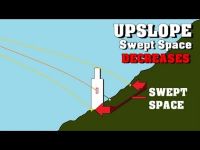
S8 E3 • SWEPT SPACE and DANGER SPACE
What is danger space? What is swept space? How close do you have to get when ranging your targets for long range shooting? This tutorial series has the answers! Definitions: Danger Space: simply helps us to determine an allowable error for range determination. 1) an interval of space, between the point of fall (where the round hits the ground) and the rifle in which the target will be hit if situated at any point in that space. 2) The distance from the point of fall (where the round hits the ground) through which a target of a given height can be moved directly towards the rifle and still have the projectile pass through the target. Danger Range: This is the distance out to which you can hold at the bottom of the target and still hit it. It is the part of the trajectory where the bullet is travelling below the height of the target -- can occur before and after the max ordinate. In cases where the MAX ORD is lower than the target height, the entire distance to the target is the danger range. Swept Space: linear measurement of the cone of fire created by shots placed at the top of the target and those placed at the bottom of the target. Depends on the slope of ground that the target is standing on. 1) Ground rising in front of the shooter -- swept space decreases 2) Ground sloping away from the shooter -- swept space increases Suggested Reading on these topics: FM 23-10 FMFM 1-3B Naval Gunnery Text TC 31-20-4 The Complete .50 cal Sniper Course HTI by Dean Michaelis TC 23-14 Thank you for your donations to the Rex Reviews Project! We hope these videos continue to be a great help to you all. All the music in this video was created by TiborasaurusRex, an unsigned artist. Song Title: Particle Jam, Magnetic Night Music and Lyrics by: TiborasaurusRex Instrumentation and Vocals by: TiborasaurusRex Recorded by: TiborasaurusRex

S8 E4 • How to use Mil-Dots for Ranging Targets
Ranging targets with your scope reticle discussed in detail. Ranging Formulas: Target size (any unit) x 1000 / Mils = Range (any unit) Target Size (inches) x 25.4 / Mils = Range (m) Target size (inches) x 100 / MOA = Range (yards) HOW TO USE: Collect and record the dimensions of various potential TRPs (target reference points) in your dope book. Try to anticipate any possible objects that you may see in your AO that could be used to range distances to various TRPs on your range card. Draw up range card... designate and range all your TRPs ahead of time. This will enable you to deliver fire very quickly when a target presents itself in proximity to a TRP at a predetermined distance. If target presents itself at an unknown range, you may have to range the target itself (assuming you know its dimensions). Advantages: Positive range bracket acquisition Passive range finding system (does not emit light) Mils are always available -- can't loose your optic Not battery dependent -- can operate for extended periods w/o battery resupply Limitations: Have to know target dimensions The full known dimensions of the object being ranged must be visible and should be situated perpendicular to the range finding device Requires extreme steady position Only relatively effective out to 700 yards for most applications Typically takes 10 -- 30 seconds to accomplish When to use Ranging Reticles: At a minimum, an optical trigonometric confirmation of any target's range should be performed when time allows -- don't trust LASER or GPS readings alone. Use in situations where use of LASERs may risk enemy detection. Although reticles will have somewhat limited use at longer ranges do to error probability the ranging reticle will be your PRIMARY RANGING BACKUP & CONFIRMATION METHOD. Thank you for your donations to the Rex Reviews Project! We hope these videos continue to be a great help to you all. All the music in this video was created by TiborasaurusRex, an unsigned artist. Song Title: Wadi Watir, Particle Jam Music and Lyrics by: TiborasaurusRex Instrumentation and Vocals by: TiborasaurusRex Recorded by: TiborasaurusRex
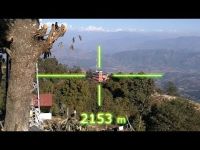
S8 E5 • LASER Rangefinder Advantages and Limitations
Are there any limitations when using a LASER rangefinder? This video discusses the employment of LASER range finders in detail. L.A.S.E.R. Definition: Light Amplification by Stimulated Emission of Radiation A LASER Rangefinder Operates on simple time of flight principle. Distance = Rate x Time Advantages: Very quick and easy to use Can give very precise measurements to the target (+ or -- 3m) Does not require knowledge the objects dimensions to range accurately -- can range trees, hills, etc... Limitations: Beam Divergence: is an angular measure of the increase in beam diameter or radius with distance from the optical aperture or antenna aperture from which the electromagnetic beam emerges. Scintillation and Beam Wander Effects: occur due to different air densities along the way... this essentially turns the air into a lens which can deflect the path of the beam. Beam Grazing: can prove to be problematic when ranging targets that are either only partially exposed OR when ranging targets that are located in front of a somewhat undefined backstop. When the beam of the LASER is grazing the target from a low angle (whether it be through grass or brush, or maybe even across a long smoothly sloping area like unobscured desert terrain, the level of confidence you have that the target itself is actually being bracketed (and NOT the ground in front of it or behind it), drops dramatically. This is one area, where optical rang finding methods (such as milling the target with a reticle) are superior. Unseen Obstructions: Some of the beam might reflect off leaves or branches in front of the target, giving an early return and a reading which is short. Mirage: At longer ranges, the target may vanish into a mirage, caused by temperature gradients in the air. OTHER LIMITATIONS: Risk of enemy detection. Performance is Dependent upon Power Supply. When to use LASERs: When determining ranges to TRPs at extreme long ranges When high value targets of opportunity present themselves outside your predetermined range (off the card) and time is limited. When enemy is not equipped with LASER detection equipment Or anytime when your location is no mystery and you need ranges in a hurry. Thank you for your donations to the Rex Reviews Project! We hope these videos continue to be a great help to you all. All the music in this video was created by TiborasaurusRex, an unsigned artist. Song Titles: Particle Jam, Magnetic Night Music and Lyrics by: TiborasaurusRex Instrumentation and Vocals by: TiborasaurusRex Recorded by: TiborasaurusRex

S8 E6 • Best LASER for Extreme Long Range Precision Shooting
To make a long story short - when choosing a LASER rangefinder, get twice as much as you think you will ever need, because these things are imperfect at best. To reduce your stress and anxiety levels in the field, just buy a Vectronix Terrapin and be done with it. Thank you for your donations to the Rex Reviews Project! We hope these videos continue to be a great help to you all. All the music in this video was created by TiborasaurusRex, an unsigned artist. Song Title: Wadi Watir Music and Lyrics by: TiborasaurusRex Instrumentation and Vocals by: TiborasaurusRex Recorded by: TiborasaurusRex
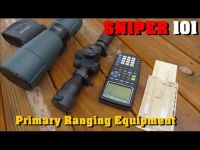
S8 E7 • Range Confirmation Using GPS, Maps, and Aerial Photography
When shooting at extreme long ranges, its best to confirm your range to the target using multiple methodologies. Remember that as your target gets farther away your danger space decreases requiring a more precise range determination. Thank you for your donations to the Rex Reviews Project! We hope these videos continue to be a great help to you all. All the music in this video was created by TiborasaurusRex, an unsigned artist. Song Title: Wadi Watir Music and Lyrics by: TiborasaurusRex Instrumentation and Vocals by: TiborasaurusRex Recorded by: TiborasaurusRex
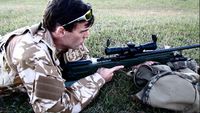
S8 E8 • Marksmanship Tips for Long Range Precision Shooting
In this video, Rex explains the fundamentals of rifle marksmanship in the context of long range precision shooting. This is the easy part of long range shooting in Rex's opinion. The act of shooting is relatively natural and seems to be dominated by muscle memory in relatively short order. Just pay attention to these tips and you should be good to go. Thank you for your donations to the Rex Reviews Project! We hope these videos continue to be a great help to you all. All the music in this video was created by TiborasaurusRex, an unsigned artist. Song Titles: Magnetic Night, Take Me Home, Dawn of the Day and Particle Jam Music and Lyrics by: TiborasaurusRex Instrumentation and Vocals by: TiborasaurusRex Recorded by: TiborasaurusRex