20 épisodes
(1 h 40 min)
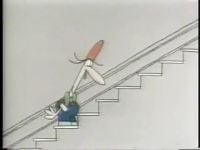
S2 E1 • Le plan incliné
Le plan incliné
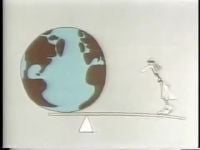
S2 E2 • Le levier
Le levier
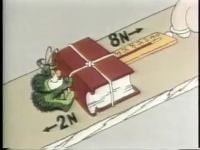
S2 E3 • Le gain mécanique et le frottement
Le gain mécanique et le frottement
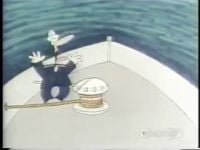
S2 E4 • La vis et la roue
La vis et la roue
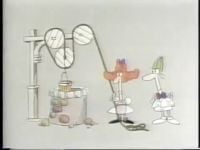
S2 E5 • La poulie
La poulie

S2 E6 • Les molécules dans les solides
Les molécules dans les solides
S2 E7 • Les molécules dans les liquides
Les molécules dans les liquides
S2 E8 • L'évaporation et la condensation
L'évaporation et la condensation
S2 E9 • La dilatation et la contraction
La dilatation et la contraction
S2 E10 • Mesure de la température
Given three bathtubs of varying temperature, the star of the show ""blunts"" his feet so that they can't tell temperature. Sure they can't. The human body can only tell changes in temperature in comparison to what it had been used to. It's up to an independent device: a thermometer and the scale devised by Anders Celsius.
S2 E11 • La différence entre la température et la chaleur
What is better to warm up a kiddie pool: a teacup of boiling water (100° Celsius) or a bucket of water at 50° Celsius? The answer tells you the difference between temperature and heat.
S2 E12 • Les atomes
There's more to matter than the molecules we had spent discussing in the previous six shows. This fourth unit produces that first look at atoms.
S2 E13 • Les électrons
An atom is made of mostly empty space. The electrons in an atom zoom around at fantastic speeds to create existence out of something that is mostly nothingness (at the atomic level).
S2 E14 • La conduction
All objects conduct heat, of course, but get a look at objects from the atomic level and you'll see why some objects conduct heat faster than others.
S2 E15 • Le volume et la masse volumique
To set up audiences for The Convection of Heat, this question is posed: how can you fit eight junky cars into a small space?
S2 E16 • La flottabilité
How come an anchor is easier to lift if it's in the water than in open air? It lies in the density of an object versus a certain quantity of water.
S2 E17 • La convection
Now that the Principle of Buoyancy is understood, one can fully grasp The Convection of Heat. This is demonstrated with a furnace not being in the attic of a house.
S2 E18 • Chaleur en tant qu'énergie
An animated Count Rumford demonstrates, for the first time, how heat can be used to produce energy. The show converts a Calorie as the amount produced from 4200 joules of work.
S2 E19 • Les ondes de la radiation
Why does somebody stand in the shade on a hot day? This show introduces the third method by which heat can be transferred: radiation.
S2 E20 • Le spectre de la radiation
Is it just your imagination that you are warmer when you wear dark clothes over white clothes? That actually sets off a reveliation on what color really is.