17 épisodes
(1 h 25 min)
Filtrer
Saison 1
Saison 2
Saison 3
Saison 4
Saison 5
Saison 6
Saison 7
Saison 8
Saison 9
Saison 10
Saison 11
Saison 12
Saison 13
Saison 14
Saison 15
Saison 17
Épisodes
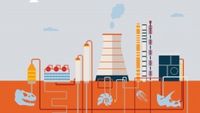
S8 E1 • Why You Should Love Fossil Fuel
Every year on Earth Day we learn how bad humanity's economic development is for the health of the planet. But maybe this is the wrong message. Maybe we should instead reflect on how human progress, even use of fossil fuels, has made our environment cleaner and healthier. Alex Epstein of the Center for Industrial Progress explains.
Première diffusion : 20 avril 2015
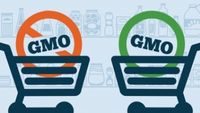
S8 E2 • Are GMOs Good or Bad
Are GMOs really the dangerous experimental foods that activists claim? Patrick Moore cuts through the hype and gives you the facts: how GMOs improve our lives, and how they can save millions of people in the developing world from hunger and disease -- if we only let them.
Première diffusion : 26 juillet 2015

S8 E3 • The Truth about CO2
Global Warming activists will tell you that CO2 is bad and dangerous. The EPA has even classified it as a pollutant. But is it? Patrick Moore provides some surprising facts about the benefits of CO2 that you won't hear in the current debate.
Première diffusion : 26 juillet 2015

S8 E4 • Trees Are the Answer
Everybody loves trees, so why are they so controversial? Patrick Moore untangles the knotty issue of "deforestation" and shows how, from a purely environmental perspective, it is possible and desirable to grow more trees and use more wood products.
Première diffusion : 26 juillet 2015
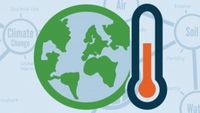
S8 E5 • What They Haven't Told You about Climate Change
Since time immemorial, our climate has been and will always be changing. Patrick Moore explains why "climate change," far from being a recent human-caused disaster, is, for a myriad of complex reasons, a fact of life on Planet Earth.
Première diffusion : 26 juillet 2015

S8 E6 • Why I Left Greenpeace
Patrick Moore explains why he helped to create Greenpeace, and why he decided to leave it. What began as a mission to improve the environment for the sake of humanity became a political movement in which humanity became the villain and hard science a non-issue.
Première diffusion : 26 juillet 2015
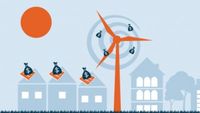
S8 E7 • Can We Rely on Wind and Solar Energy
Is green energy, particularly wind and solar energy, the solution to our climate and energy problems? Or should we be relying on things like natural gas, nuclear energy, and even coal for our energy needs and environmental obligations? Alex Epstein of the Center for Industrial Progress explains. Learn about Alex Epstein's book, The Moral Case for Fossil Fuels.
Première diffusion : 19 octobre 2015
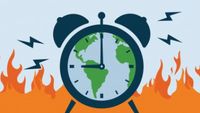
S8 E8 • Is Climate Change Our Biggest Problem
Is man-made climate change our biggest problem? Are the wildfires, droughts and hurricanes we see on the news an omen of even worse things to come? The United Nations and many political leaders think so and want to spend trillions of tax dollars to reverse the warming trend. Are they right? Will the enormous cost justify the gain? Economist Bjorn Lomborg, director of the Copenhagen Consensus Center, explains the key issues and reaches some sobering conclusions.
Première diffusion : 30 novembre 2015

S8 E9 • Are Electric Cars Really Green
Are electric cars greener than conventional gasoline cars? If so, how much greener? What about the CO2 emissions produced during electric cars' production? And where does the electricity that powers electric cars come from? Environmental economist Bjorn Lomborg, director of the Copenhagen Consensus Center, examines how environmentally friendly electric cars really are.
Première diffusion : 8 février 2016
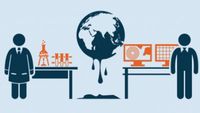
S8 E10 • Climate Change- What Do Scientists Say
Climate change is an urgent topic of discussion among politicians, journalists and celebrities...but what do scientists say about climate change? Does the data validate those who say humans are causing the earth to catastrophically warm? Richard Lindzen, an MIT atmospheric physicist and one of the world's leading climatologists, summarizes the science behind climate change.
Première diffusion : 18 avril 2016
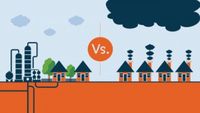
S8 E11 • Fossil Fuels- The Greenest Energy
To make earth cleaner, greener and safer, which energy sources should humanity rely on? Alex Epstein of the Center for Industrial Progress explains how modern societies have cleaned up our water, air and streets using the very energy sources you may not have expected--oil, coal and natural gas.
Première diffusion : 21 avril 2016

S8 E12 • Do 97% of Climate Scientists Really Agree
Is it true that 97% of climate scientists agree that climate change is real? Where does the 97% figure come from? And if it is true, do they agree on both the severity of and the solution to climate change? New York Times bestselling author Alex Epstein, founder of the Center for Industrial Progress, reveals the origins of the "97%" figure and explains how to think more clearly about climate change.
Première diffusion : 11 juillet 2016

S8 E13 • Climate Change- What's so Alarming
Are droughts, hurricanes, floods and other natural disasters getting stronger and more frequent? Are carbon dioxide emissions, global temperatures and sea levels putting us on a path for climate catastrophe? Bjorn Lomborg, Director of the Copenhagen Consensus Center, breaks down the facts about the environment and shows why the reality of climate change may be very different from what you hear in the media.
Première diffusion : 28 juillet 2016

S8 E14 • Can a Desert Nation Solve the World's Water Shortage
From California to Africa, we are facing a global water shortage. But one tiny country, in the middle of a desert, has found remarkable solutions. Which country? And can we replicate its success? Businessman and New York Times bestselling author Seth Siegel explains.
Première diffusion : 17 octobre 2016
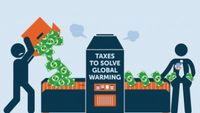
S8 E15 • The Paris Climate Agreement Won't Change the Climate
The Paris Climate Agreement will cost at least $1 trillion per year, and climate activists say it will save the planet. The truth? It won't do anything for the planet, but it will make everyone poorer--except politicians and environmentalists. Bjorn Lomborg explains.
Première diffusion : 16 janvier 2017
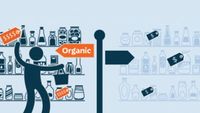
S8 E16 • Is Organic Food Worth the Cost
Are organic foods really healthier than non-organic foods? Are they better for animals? Are they better for the environment? Bjorn Lomborg, president of the Copenhagen Consensus Center, explains.
Première diffusion : 25 mai 2017

S8 E17 • Can Climate Models Predict Climate Change
Predicting climate temperatures isn't science – it's science fiction. Emeritus Professor of Physics at Princeton University Will Happer explains.
Première diffusion : 5 février 2018