10 épisodes
(4 h 10 min)
Épisodes

S6 E1 • Ballistics Table - Muzzle Velocity Variation pt. 1
Muzzle velocity is NOT a constant! It varies considerable due to a host of factors. In order to successfully engage targets at long range it is CRUCIAL that you be able to predict account for your MVV (muzzle velocity variation). This is the entrance key into effectively setting your ballistics tables. Whether you will be using ballistic software in the field, ballistic cards, or using a calc form to come up with your firing solutions, this information is key to getting your ballistic data arranged in a way that will be effective across various bore conditions and multiple ammunition temperature ranges. Below is the link to the Ammo Temp MV Curve TABLES by TiborasaurusRex: https://docs.google.com/file/d/0Bzvx3RuRX1QTNzBkV3R2UE14WDA/edit?usp=sharing DOWNLOAD THE CURRENT VERSION by hitting the downward pointing arrow at the top left of the page and OPEN or SAVE the document so you can use it. Video DETAILED NOTES: Muzzle Velocity Variation (MVV) A. Bore/projectile Dynamics and MVV 1. Bore wear - Gas escaping around the projectile decreases chamber pressure and can lower MV 2. Fowling - An increase in bore resistance to projectile movement before peak pressure increases the pressure developed within the barrel and can cause MVV. 3. Coppering a) Slight coppering resulting from firing a small sample of rounds at higher charges tends to increase muzzle velocity. b) Erratic velocity performance is a result of excessive coppering whereby the resistance of the bore to projectile movement is affected. 4. Bore Temperature - Variations in bore resistance can be caused by temperature differences between the inner and outer surfaces of the barrel. 5. Projectile Temperature 6. Barrel Memory - Originally observed in field artillery -- According to the FM 6-40: Tube Memory is a physical phenomenon of the cannon tube tending to react to the firing stress in the same manner for each round, even after changing charges. It seems to "remember" the muzzle velocity of the last charge fired. For example, if a fire mission with charge 6 M4A2 is followed by a fire mission with charge 4 M4A2, the muzzle velocity of the first round of charge 4 may be unpredictably higher. The inverse is also true. B. Rifle manufacturing tolerances and MVV 1. Chamber dimensions a) headspace b) bolt lockup c) chamber size C. Ammunition Inconsistencies and MVV 1. Minimizing Ammunition Inconsistencies that increase MVV a) Factory Ammo -- buy premium quality match grade ammo b) Reloading -- you control quality and can custom developed loads D. Ammunition Temperature and MVV 1. Propellant Burn Rate Changes with Temperature Ammunition Burn Rate Curve 1. Setting up and Ammunition Burn Rate Conversion Chart 2. Causes of Ammo Temperature Changes a. Ambient Air Temp b. Sunlight c. Chamber Temperature (1) cold bore shot (2) hot bore shots - cycling ammo in chamber 3. Dealing with Ammunition Temp Issues a. Use Ammo Burn Rate Conversion Chart b. Ammo Storage - The temperature of cartridges in sealed containers remains somewhat insulated from differences in ambient air temperature. Once a cartridge has been unpacked, its temperature more rapidly approaches the air temperature. The time and type of exposure to the weather results in temperature variations from round to round and the shooter must be aware of this. These precautions will allow propellant and projectile temperatures to approach the air temperature at a uniform rate throughout the firing unit. 4. Also, copper jacket lubricity changes with temp, as does brass case and the lead bullet core plasticity -- all can affect MV. All the music in this video was created by TiborasaurusRex, an unsigned artist. Song Title: Wadi Watir Music and Lyrics by: TiborasaurusRex Instrumentation and Vocals by: TiborasaurusRex Recorded by: TiborasaurusRex The ammo temperature muzzle velocity calculator was created on Microsoft Excel by TiborasaurusRex using burn rate data obtained from the "Ammunition Burn Rate Conversion Chart" figure in a book titled: "The Complete .50-Caliber Sniper Course Hard Target Interdiction" by Dean Michaelis, pages 175 and 176. ISBN 1-58160-068-2 www.paladin-press.com To review these various concepts in more detail, also see the US Army FM 6-40 Weapon featured in thumbnail image is a Remington 700 SA equipped with an Applied Weapons Technologies chassis system - full review coming soon. More info: http://www.appliedweaponstech.com/page/products

S6 E2 • Ballistics Table - Muzzle Velocity Variation pt. 2
In this video, Rex walks you through the process of logging your muzzle velocity variation (MVV) due to varying bore conditions and ammunition temperature variations. If you do not have access to Microsoft EXCEL, you may have to do this by hand. Either way, this video gives you the information you need to get started. The graph produced by this calculator will be the first page of your ballistics tables and will be used every time you calculate a new firing solution in the field. Failure to account for your MVV in the field will undoubtedly throw you off target. Evan at medium ranges, MVV due to ammo temperature can be huge! Your MV can change by over 200 fps due to varying ammo temperatures, and that will obviously have to be accounted for. NOTE: Even with the use of propellants designed to have limited burn rate changes over different temperatures, MVV due to ammo temperature will STILL exist due to numerous other factors (see previous video). Below is the link to the Ammo Temp MV Curve TABLES by TiborasaurusRex: https://docs.google.com/file/d/0Bzvx3RuRX1QTNzBkV3R2UE14WDA/edit?usp=sharing DOWNLOAD THE CURRENT VERSION by hitting the downward pointing arrow at the top left of the page and OPEN or SAVE the document so you can use it. This calculator was created on Microsoft Excel by TiborasaurusRex using brn rate data obtained from the "Ammunition Burn Rate Conversion Chart" figure in the book titled: "The Complete .50-Caliber Sniper Course Hard Target Interdiction" by Dean Michaelis, pages 175 and 176. ISBN 1-58160-068-2 This book is a great source of information, be sure to check it out at www.paladin-press.com All the music in this video was created by TiborasaurusRex, an unsigned artist. Song Title: Wadi Watir, Minefield Music and Lyrics by: TiborasaurusRex Instrumentation and Vocals by: TiborasaurusRex Recorded by: TiborasaurusRex

S6 E3 • Suppressors, Brakes, and Transitional Ballistics
How do sound suppressors and other muzzle devices effect accuracy? In this video Rex introduces you to the topic of transitional ballistics and discusses what the long range precision rifleman should be aware of concerning this topic. All the music in this video was created by TiborasaurusRex, an unsigned artist. Song Title: Wadi Watir Music and Lyrics by: TiborasaurusRex Instrumentation and Vocals by: TiborasaurusRex Recorded by: TiborasaurusRex

S6 E4 • Intro to Advanced External Ballistics & Tables
Ballistic tables are an intergral part of the long range rifle system. In order to make the shot you will have to know exactly where to index your optic. In this video, Rex introduces the topic of long range external ballistics and shows you what ou can expect to learn in the next portion of the series. Rex's awesome Don't Tread On Me hoodie donated by: www.Save-the2nd.com Review coming soon on the AWT (Applied Weapons Technologies) chassis system shown in the video: http://www.appliedweaponstech.com/ All the music in this video was created by TiborasaurusRex, an unsigned artist. Copies of the forms, excel sheets, and any other documents being used will be provided ASAP. Song Title: Particle Jam, Transient as a Shadow Music and Lyrics by: TiborasaurusRex Instrumentation and Vocals by: TiborasaurusRex Recorded by: TiborasaurusRex

S6 E5 • Zero Your Rifle in 3 SHOTS
Sighting in made easy! Time to make sure everyone is zeroed! Don't be scared - just watch this video. This video is intended for those who have watched the preceding videos and understand and have properly selected their scopes based on the criteria for scope selection we gave earlier. In this video Rex gives you the typical long-winded comprehensive explanation of what to do! Bore sighting??? Yup. Turning the knobs??? Yup. Slipping the scales to zero??? Yup. All pretty easy. Plus Rex takes his new .243 Winchester to the max (1388 yards) after the first 5 shots! Does he miss??? Yes. Did he eventually correct for it?? Yes. This video is a great intro for those wondering how we will be using these LR tactical scopes in the field. The Remington 700 SPS .243 Win rifle in this video was fitted to a Long Range Precision Chassis made by Applied Weapons Technologies. See website below: http://www.appliedweaponstech.com/page/products All the music in this video was created by TiborasaurusRex, an unsigned artist. Song Titles: Magnetic Night, Wadi Watir Music and Lyrics by: TiborasaurusRex Instrumentation and Vocals by: TiborasaurusRex Recorded by: TiborasaurusRex
S6 E6 • Ballistics Tables - Excel TEMPLATES Intro
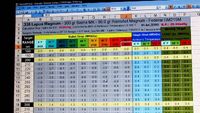
Making ballistic tables can seem confusing at first. Trying to arrange the data in a logical, field expedient manner can be a challenge. In this video, Rex introduced you to the ballistic templates we will be using to construct our tables. There are many ways to tweak and customize these plates to suit your mission criteria, so please feel free to adjust as needed. NOTE: Each template represents 1 table; you will need to construct a separate table for each barometric pressure zone you will be operating in. For operators who will encounter multiple BP zones, it is recommended to construct tables in even B.P. value increments divisible by 10s. Example: First table is for 30.00 inHg, next table is for 29.00 in Hg, next is for 28.00 inHg - etc... this will make interpolations between these B.P. zones much easier in the field. Millibars are also fine to use, just be sure to label your templates accordingly. NOTE: If you want to use degrees Celsius or if the temperature range is inappropriate for your AO, please feel free to adjust the template accordingly. Simply delete or add columns/cells/rows as needed. The entire template is editable. EXCEL / computer difficulties: If you are new to Excel (or computers in general) and can't seem to figure it out, you may need to find someone who is familiar with the program to give you a hand. Also, it is entirely possible to duplicate the template on your own once you see how they are set up. Most professional shooters classically constructed their ballistic tables by hand using a pencil and paper. Here are the TEMPLATE links: when you open these, click on the downward pointing arrow button on the upper left side to open the adjustable Excel sheet. Rex's Example Sheet: See what it will look like when its all filled out. https://docs.google.com/file/d/0Bzvx3RuRX1QTbWxtR01tWXBvTHM/edit?usp=sharing Template.xls: 10 METER increments -- MOA/MOA (reticle/turrets) https://docs.google.com/file/d/0Bzvx3RuRX1QTQ196RThCSXBBMkU/edit?usp=sharing Template.xls: 10 METER increments -- MRAD/MOA (reticle/turrets) https://docs.google.com/file/d/0Bzvx3RuRX1QTMUZDbGJKZjRkcG8/edit?usp=sharing Template.xls: 10 METER increments -- MRAD/MRAD (reticle/turrets) https://docs.google.com/file/d/0Bzvx3RuRX1QTdk1RaGI1QW5KTlk/edit?usp=sharing Template.xls: 10 YARD increments -- MOA/MOA (reticle/turrets) https://docs.google.com/file/d/0Bzvx3RuRX1QTRjVKTlpraWpQdzA/edit?usp=sharing Template.xls: 10 YARD increments -- MRAD/MOA (reticle/turrets) https://docs.google.com/file/d/0Bzvx3RuRX1QTcnVnYTRQTFRQT0U/edit?usp=sharing Template.xls: 10 YARD increments -- MRAD/MRAD (reticle/turrets) https://docs.google.com/file/d/0Bzvx3RuRX1QTN0VrNVZVSWtoSkk/edit?usp=sharing Template.xls: 100 METER increments -- MOA/MOA (reticle/turrets) https://docs.google.com/file/d/0Bzvx3RuRX1QTckxRLVFIeG9qQ3c/edit?usp=sharing Template.xls: 100 METER increments - MOA/MRAD (reticle/turrets) https://docs.google.com/file/d/0Bzvx3RuRX1QTNnFaQklOdkNTbG8/edit?usp=sharing Template.xls: 100 METER increments -- MRAD/MRAD (reticle/turrets) https://docs.google.com/file/d/0Bzvx3RuRX1QTdDkzZHJERTlKS1k/edit?usp=sharing Template.xls: 100 YARD increments -- MOA/MOA (reticle/turrets) https://docs.google.com/file/d/0Bzvx3RuRX1QTMm5xdUdpTFFaWWM/edit?usp=sharing Template.xls: 100 YARD increments -- MOA/MRAD (reticle/turrets) https://docs.google.com/file/d/0Bzvx3RuRX1QTMTN4NUtOM2dTc28/edit?usp=sharing Template.xls: 100 YARD increments -- MRAD/MRAD (reticle/turrets) https://docs.google.com/file/d/0Bzvx3RuRX1QTT213QVZOQVNJVjA/edit?usp=sharing MUSIC: All the music in this video was created by TiborasaurusRex, an unsigned artist. Song Title: Wadi Watir and Magnetic Night Music and Lyrics by: TiborasaurusRex Instrumentation and Vocals by: TiborasaurusRex Recorded by: TiborasaurusRex

S6 E7 • JBM Ballistics Intro
This video tutorial shows the process of using JBM ballistics to calculate the drop data needed to fill in our ballistic table templates. There are many different ballistic software programs out there that do a great job at calculating these things, so please feel free to use which ever software you are most satisfied with. These templates are designed to give you that flexibility to plug in what you want. JBM ballistics is a very good program that I recommend for the purposes of this shooting discipline. Although I have developed similar programs using Excel for my own purposes, adjusting the various inputs and parameters for your chosen output units (meters/MOA/MRADs, etc...) has proven exceedingly difficult and is not near as flexible as this system. Pasting the information into the templates (as shown in this video) from JBM ballistics or any other appropriate programs will yield the best results and will be much easier to do. If you try this long-hand, you may wish to die. NOTE: Your calculated ballistic data will only be as precise as the inputs you enter into the program. Be sure to triple check all of your inputs before calculating. Pay special attention to your MVs at the various temperatures. Logging your MV variation at different ammunition temperatures is a CRUCIAL component in getting good data back from this or any other software. Actual MVs in any rifle change over time due to a number of factors. Be sure to keep an eye on your MVs. Much more to come! Stay tuned and share this with your friends! Here are the TEMPLATE links: when you open these, click on the downward pointing arrow button on the upper left side to open the adjustable Excel sheet. Rex's Example Sheet: See what it will look like when its all filled out. https://docs.google.com/file/d/0Bzvx3RuRX1QTbWxtR01tWXBvTHM/edit?usp=sharing Template.xls: 10 METER increments -- MOA/MOA (reticle/turrets) https://docs.google.com/file/d/0Bzvx3RuRX1QTQ196RThCSXBBMkU/edit?usp=sharing Template.xls: 10 METER increments -- MRAD/MOA (reticle/turrets) https://docs.google.com/file/d/0Bzvx3RuRX1QTMUZDbGJKZjRkcG8/edit?usp=sharing Template.xls: 10 METER increments -- MRAD/MRAD (reticle/turrets) https://docs.google.com/file/d/0Bzvx3RuRX1QTdk1RaGI1QW5KTlk/edit?usp=sharing Template.xls: 10 YARD increments -- MOA/MOA (reticle/turrets) https://docs.google.com/file/d/0Bzvx3RuRX1QTRjVKTlpraWpQdzA/edit?usp=sharing Template.xls: 10 YARD increments -- MRAD/MOA (reticle/turrets) https://docs.google.com/file/d/0Bzvx3RuRX1QTcnVnYTRQTFRQT0U/edit?usp=sharing Template.xls: 10 YARD increments -- MRAD/MRAD (reticle/turrets) https://docs.google.com/file/d/0Bzvx3RuRX1QTN0VrNVZVSWtoSkk/edit?usp=sharing Template.xls: 100 METER increments -- MOA/MOA (reticle/turrets) https://docs.google.com/file/d/0Bzvx3RuRX1QTckxRLVFIeG9qQ3c/edit?usp=sharing Template.xls: 100 METER increments - MOA/MRAD (reticle/turrets) https://docs.google.com/file/d/0Bzvx3RuRX1QTNnFaQklOdkNTbG8/edit?usp=sharing Template.xls: 100 METER increments -- MRAD/MRAD (reticle/turrets) https://docs.google.com/file/d/0Bzvx3RuRX1QTdDkzZHJERTlKS1k/edit?usp=sharing Template.xls: 100 YARD increments -- MOA/MOA (reticle/turrets) https://docs.google.com/file/d/0Bzvx3RuRX1QTMm5xdUdpTFFaWWM/edit?usp=sharing Template.xls: 100 YARD increments -- MOA/MRAD (reticle/turrets) https://docs.google.com/file/d/0Bzvx3RuRX1QTMTN4NUtOM2dTc28/edit?usp=sharing Template.xls: 100 YARD increments -- MRAD/MRAD (reticle/turrets) https://docs.google.com/file/d/0Bzvx3RuRX1QTT213QVZOQVNJVjA/edit?usp=sharing All the music in this video was created by TiborasaurusRex, an unsigned artist. Song Titles: Wadi Watir and Under the Ice Music and Lyrics by: TiborasaurusRex Instrumentation and Vocals by: TiborasaurusRex Recorded by: TiborasaurusRex
S6 E8 • INTERPOLATION
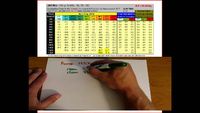
You know the bullet drop for your rifle at 900m and you know it for 1000m, but how do you find out your bullet drop at 934m? In this video, Rex will show you how to interpolate between different values. Whether you need to figure out an intermediate barometric pressure correction, an in-between temperature correction, or your bullet drop at a given range, interpolation will get you very close. NOTE: This is a skill you will NOT want to overlook. Understanding interpolation will be very important to calculating sound firing solutions in the field. Remember, you will only be able to use 10% of any given skill set when under extreme pressure. 90% of your math abilities will go right out the window when you need it most - so learn this as good as you possibly can right now. DON'T WORRY: If this seems like too much at first, please understand that balancing multiple step interpolations in the field can be quite difficult. Even I get them mixed up sometimes. Although it may seem intimidating at first, this is something you at least want to familiarize yourself with if you wish to operate efficiently in the field. A famous man may have once said: "Hang in there, ye all, who are long of your school years long gone bye bye!" (or maybe not) lol All the music in this video was created by TiborasaurusRex, an unsigned artist. Song Title: Wadi Watir and Magnetic Night Music and Lyrics by: TiborasaurusRex Instrumentation and Vocals by: TiborasaurusRex Recorded by: TiborasaurusRex

S6 E9 • External Ballistics - Pressure & Gravity
In order to understand bullet stability, you will have to understand how the center of pressure and center of gravity relate to each other. Watch this video to get the definitions squared away before we move on to fill in more of the details. Also see Rex play with a M865 Cone-Stabilized Discarding Sabot KE Projectile used in the M1A1 and M1A2 Abram's 120mm smooth bore main guns. Yeah, I know the feathers on an arrow are called the fletchings, but hey - I am a rock and roll rebel and I make my own rules sucka'. The last comment was added for flavour and is titled: "Attitude" Take it seriously at your own risk. Center of Gravity: the balance point of the projectile The Center of Pressure: is the point where the aerodynamic forces acting on the bullet are balanced along its longitudinal axis NEW: Donation Button - finally added to TiborasaurusRex's main page - for all those who have offered to help fund this operation. Thanks to those who have helped thus far. :-D All the music in this video was created by TiborasaurusRex, an unsigned artist. Song Title: Wadi Watir, Dawn of the Day Music and Lyrics by: TiborasaurusRex Instrumentation and Vocals by: TiborasaurusRex Recorded by: TiborasaurusRex

S6 E99 • DELETE