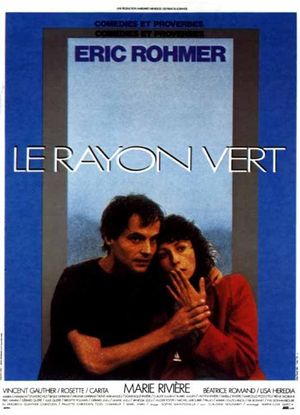
VOSTA vue sur Film4 (cycle Rohmer), revu sur ARTE (Summer of Freedom).
Mon troisième Rohmer et celui que je déteste le plus, si je ne compte pas celui avec lequel je l'ai découvert (L'Ami de mon amie) et que j'adore autant que je hais. Ce n'est pas pour son héroïne insatisfaite et plaintive qui ne peut exister sans un homme et reste incomprise des autres. Ce n'est pas pour Marie Rivière, pourtant la seule "rohmérienne" qui m'insupporte naturellement (le seul rôle lui allant comme un gant étant celui de l'arnaqueuse face à Reinette). Ce n'est pas pour la futilité des instants narrés (tout Rohmer ou presque étant futile par essence). C'est probablement pour les dialogues qui sonnent étonnamment faux pour un film de Rohmer, pour le film lui-même face auquel mon cerveau ne cesse de protester "Ce n'est pas un Rohmer ! C'est impossible !"
Score: 3/10
Plaisir: 0/5 Dire que c'est l'un de ses films ayant fait le plus d'entrées.
======================================
VOSTA revue sur OK.
Why are you crying?
30-something: the depression chapter or "Delphine goes on holidays".
I didn't notice before but what the character goes through, the way she behaves, and her belief that she needs someone (a man -_-) to make up for her apparent emptiness all ring like a psychiatrist filling a list tracking depression-related behaviours and thoughts.
I don't have anything. If I had something to show, people would see it, that's all!
It also seems horribly close to observing me in Rohmer's square world (if I had people on wich I could rub myself the whole holiday long). Spoiling its holidays stupidly like this makes me angry at her yet I did the exact same thing, every time she cried for no good reason, I wanted to slap her yet I am even worse.
I'm not someone functional. I watch people.
As usual for Rohmer, chance is playing a larger role than fictions usually accept to do. The use of a musical cue, startling in a film by this director, both highlights some of those moments and (at least for me) induced some unease (as a depression tale should?).
On the other hand, the whole improvisation nature of this project makes the dialogues sound less litterary yet less natural than what Rohmer writes normally. Unless Rivière's performance is to blame: normal people don't often put their words well together and all, but here it seems extrem: it sounds so difficult for the actress to reach the words, it's actually painful to hear. It goes way beyond realism, falling into apparent bad acting.
I'm not the one you should get to know!
It would be perfect if scenes had been better chosen (the vegetarian discussion notably makes the whole thing more "real" but is too long for something that doesn't contribute to what is told globally) and the heroin didn't had the nerve to do an entire reversal right before the end. I can't get past her sudden magical gall.
Score: 7/10
Enjoyment: 1/5 I still dislike the film (and this dutch girl). After all, it might be realistic, but this realism is entirely lost on the most futile thing on Earth: to have a man.
A lettuce is my friend...
So, after losing a few days watching films, I learned more about me in two Rohmer than with way too many (useless) psy encounters. The formula I got must be something like that:
Me = [ ( Blanche + Delphine )/2 ]²