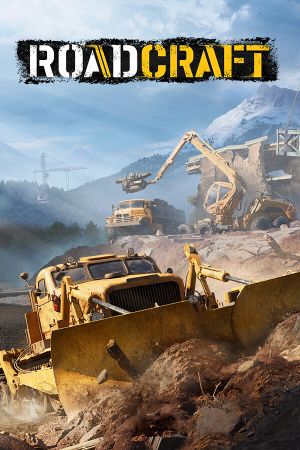
One of the biggest disappointments in Roadcraft is its driving control design, especially when compared to SnowRunner, a game from the same studio that already proved it knew how to do this right.
In SnowRunner, vehicle controls are intuitive, industry-standard, and immediately familiar: the right trigger accelerates, the left trigger brakes or reverses. This is the same logic used in most modern driving games such as Forza Horizon 5 or GTA V, and for good reason—it works. It feels natural, precise, and immersive.
Roadcraft, on the other hand, abandons this proven formula for a control scheme that feels awkward, outdated, and poorly thought out. Using the right analog stick to control forward and backward movement as well as steering is simply not practical for a driving-focused game. It lacks precision, feels uncomfortable over long play sessions, and goes against years of established controller conventions.
What makes this even more frustrating is that this is not an experimental indie title—it comes from a studio that already mastered vehicle physics and controller ergonomics in SnowRunner. The fact that Roadcraft takes such a clear step backward in this area is hard to understand and even harder to justify.
Instead of enhancing realism or accessibility, this control scheme actively works against the player. It constantly pulls attention away from the terrain, the vehicles, and the gameplay itself, forcing the player to fight the controls rather than engage with the game.
In short, Roadcraft feels like a regression. The driving controls are not just different—they are worse. For a game that relies so heavily on vehicle handling, this design choice significantly undermines the overall experience and makes Roadcraft feel unnecessarily frustrating and inferior to SnowRunner.