L'actualité sur The Weary Blues
Les dernières actions



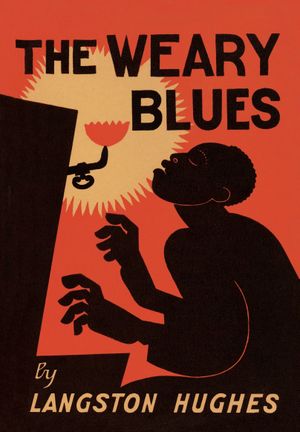
Langston Hughes · 1926
Résumé · Hughes—who was just twenty-four at the time of The Weary Blues's first appearance—spoke directly, intimately, and powerfully of the experiences of African Americans at a time when their voices were newly being heard in American literature, beginning with the opening “Proem” (prologue poem)—“I am a Negro: / Black as the night is black, / Black like the depths of my Africa." As the legendary Carl Van Vechten wrote in a brief introduction to the original 1926 edition, “His cabaret songs throb with the true jazz rhythm; his sea-pieces ache with a calm, melancholy lyricism; he cries bitterly from the heart of his race . . . Always, however, his stanzas are subjective, personal,” and, he concludes, they are the expression of “an essentially sensitive and subtly illusive nature.” That illusive nature darts among these early lines and begins to reveal itself, with precocious confidence and clarity.
9

Langston Hughes · 1926
Résumé · Hughes—who was just twenty-four at the time of The Weary Blues's first appearance—spoke directly, intimately, and powerfully of the experiences of African Americans at a time when their voices were newly being heard in American literature, beginning with the opening “Proem” (prologue poem)—“I am a Negro: / Black as the night is black, / Black like the depths of my Africa." As the legendary Carl Van Vechten wrote in a brief introduction to the original 1926 edition, “His cabaret songs throb with the true jazz rhythm; his sea-pieces ache with a calm, melancholy lyricism; he cries bitterly from the heart of his race . . . Always, however, his stanzas are subjective, personal,” and, he concludes, they are the expression of “an essentially sensitive and subtly illusive nature.” That illusive nature darts among these early lines and begins to reveal itself, with precocious confidence and clarity.
10

Langston Hughes · 1926
Résumé · Hughes—who was just twenty-four at the time of The Weary Blues's first appearance—spoke directly, intimately, and powerfully of the experiences of African Americans at a time when their voices were newly being heard in American literature, beginning with the opening “Proem” (prologue poem)—“I am a Negro: / Black as the night is black, / Black like the depths of my Africa." As the legendary Carl Van Vechten wrote in a brief introduction to the original 1926 edition, “His cabaret songs throb with the true jazz rhythm; his sea-pieces ache with a calm, melancholy lyricism; he cries bitterly from the heart of his race . . . Always, however, his stanzas are subjective, personal,” and, he concludes, they are the expression of “an essentially sensitive and subtly illusive nature.” That illusive nature darts among these early lines and begins to reveal itself, with precocious confidence and clarity.
8

Langston Hughes · 1926
Résumé · Hughes—who was just twenty-four at the time of The Weary Blues's first appearance—spoke directly, intimately, and powerfully of the experiences of African Americans at a time when their voices were newly being heard in American literature, beginning with the opening “Proem” (prologue poem)—“I am a Negro: / Black as the night is black, / Black like the depths of my Africa." As the legendary Carl Van Vechten wrote in a brief introduction to the original 1926 edition, “His cabaret songs throb with the true jazz rhythm; his sea-pieces ache with a calm, melancholy lyricism; he cries bitterly from the heart of his race . . . Always, however, his stanzas are subjective, personal,” and, he concludes, they are the expression of “an essentially sensitive and subtly illusive nature.” That illusive nature darts among these early lines and begins to reveal itself, with precocious confidence and clarity.
9





Langston Hughes · 1926
Résumé · Hughes—who was just twenty-four at the time of The Weary Blues's first appearance—spoke directly, intimately, and powerfully of the experiences of African Americans at a time when their voices were newly being heard in American literature, beginning with the opening “Proem” (prologue poem)—“I am a Negro: / Black as the night is black, / Black like the depths of my Africa." As the legendary Carl Van Vechten wrote in a brief introduction to the original 1926 edition, “His cabaret songs throb with the true jazz rhythm; his sea-pieces ache with a calm, melancholy lyricism; he cries bitterly from the heart of his race . . . Always, however, his stanzas are subjective, personal,” and, he concludes, they are the expression of “an essentially sensitive and subtly illusive nature.” That illusive nature darts among these early lines and begins to reveal itself, with precocious confidence and clarity.
7
Langston Hughes · 1926
Résumé · Hughes—who was just twenty-four at the time of The Weary Blues's first appearance—spoke directly, intimately, and powerfully of the experiences of African Americans at a time when their voices were newly being heard in American literature, beginning with the opening “Proem” (prologue poem)—“I am a Negro: / Black as the night is black, / Black like the depths of my Africa." As the legendary Carl Van Vechten wrote in a brief introduction to the original 1926 edition, “His cabaret songs throb with the true jazz rhythm; his sea-pieces ache with a calm, melancholy lyricism; he cries bitterly from the heart of his race . . . Always, however, his stanzas are subjective, personal,” and, he concludes, they are the expression of “an essentially sensitive and subtly illusive nature.” That illusive nature darts among these early lines and begins to reveal itself, with precocious confidence and clarity.
8





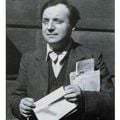


Langston Hughes · 1926
Résumé · Hughes—who was just twenty-four at the time of The Weary Blues's first appearance—spoke directly, intimately, and powerfully of the experiences of African Americans at a time when their voices were newly being heard in American literature, beginning with the opening “Proem” (prologue poem)—“I am a Negro: / Black as the night is black, / Black like the depths of my Africa." As the legendary Carl Van Vechten wrote in a brief introduction to the original 1926 edition, “His cabaret songs throb with the true jazz rhythm; his sea-pieces ache with a calm, melancholy lyricism; he cries bitterly from the heart of his race . . . Always, however, his stanzas are subjective, personal,” and, he concludes, they are the expression of “an essentially sensitive and subtly illusive nature.” That illusive nature darts among these early lines and begins to reveal itself, with precocious confidence and clarity.
8
Langston Hughes · 1926
Résumé · Hughes—who was just twenty-four at the time of The Weary Blues's first appearance—spoke directly, intimately, and powerfully of the experiences of African Americans at a time when their voices were newly being heard in American literature, beginning with the opening “Proem” (prologue poem)—“I am a Negro: / Black as the night is black, / Black like the depths of my Africa." As the legendary Carl Van Vechten wrote in a brief introduction to the original 1926 edition, “His cabaret songs throb with the true jazz rhythm; his sea-pieces ache with a calm, melancholy lyricism; he cries bitterly from the heart of his race . . . Always, however, his stanzas are subjective, personal,” and, he concludes, they are the expression of “an essentially sensitive and subtly illusive nature.” That illusive nature darts among these early lines and begins to reveal itself, with precocious confidence and clarity.
10

Langston Hughes · 1926
Résumé · Hughes—who was just twenty-four at the time of The Weary Blues's first appearance—spoke directly, intimately, and powerfully of the experiences of African Americans at a time when their voices were newly being heard in American literature, beginning with the opening “Proem” (prologue poem)—“I am a Negro: / Black as the night is black, / Black like the depths of my Africa." As the legendary Carl Van Vechten wrote in a brief introduction to the original 1926 edition, “His cabaret songs throb with the true jazz rhythm; his sea-pieces ache with a calm, melancholy lyricism; he cries bitterly from the heart of his race . . . Always, however, his stanzas are subjective, personal,” and, he concludes, they are the expression of “an essentially sensitive and subtly illusive nature.” That illusive nature darts among these early lines and begins to reveal itself, with precocious confidence and clarity.
8
SensCritique dans votre poche.
Téléchargez l’app SensCritique.
Explorez. Vibrez. Partagez.

À proposNotre application mobile Notre extensionAideNous contacterEmploiL'éditoCGUAmazonSOTA
© 2026 SensCritique
Thème